
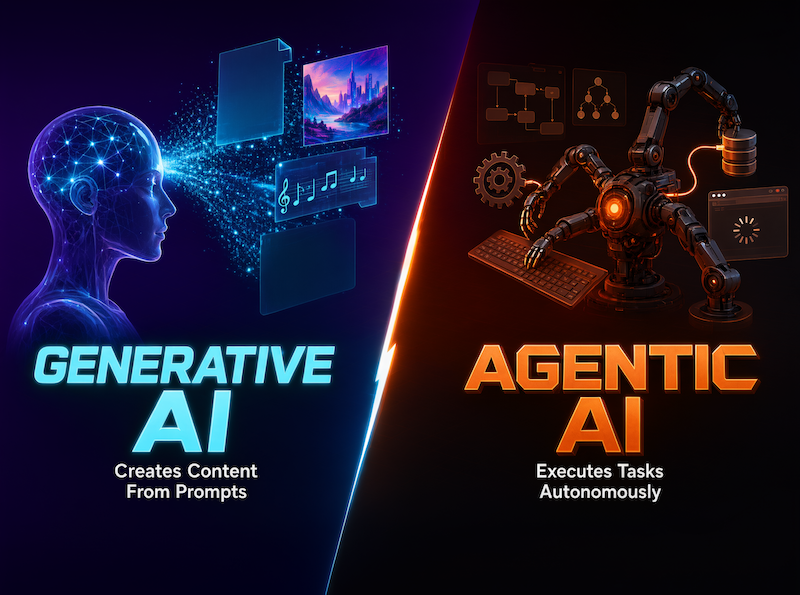
Generative AI is artifical intelligence that produce content based on input (prompt) such as text, image, audio or video. Generative AI (GenAi) relies on using machine learning models called deeplearning model. This models works by identifying and encoding the patterns and relationships in a huge amounts of data and then using that information to understand the user’s question. GenAI can produce the high quality text, images, audio based on the data they were trained.
Agentic AI is AI system that are designed to autonomously make decision and act. Agentic AI persue goals by planning, deciding, taking action. They take the high level goal break it into step, plan, use Tools or API, interact with the environment or other system, maintain the state/memory, evaluate the result and iterate until the goal is achived.
Features Generative AI and Agentic AI
Key Features of Generative AI
- Content Creation : Generate content based on user prompt.
- Data Analysis : GenAi can analyze huge data and use that analysis to discover patterns and trends
- Adaptability : GenAI can adapt it’s output based on the input it receives from user
Key Features of Agentic AI
- Decision Making : assess the situations and determine the path without or with minimal human input
- Problem Solving: Step solving issues;percieve, reason, act and learn
- Autonomy: Ability to learn and operate on it’s own make it a promising technology for organizations seeking to streamline workflows and have machine perform complex tasks with minimal human intervention
- Interactivity : Agentic AI can interact with outside environment and gather data to adjust in real-time
- Planning
Usecases Generative AI & Agentic AI
Usecases Generative AI
- Content Creation for SEO
- Marketing and Sales
- Product Design & Development
- Customer Support Automation
Usecases Agentic AI
- Customer Service : Agentic AI can automate tedious tasks by gathering, cleaning, and formatting an organization’s data. These systems can take the weight off of human employees and free them up to do more high-impact projects and tasks.
- Healthcare : AI technology has been used in the healthcare field already, including in diagnostics, patient care, and streamlining administrative tasks.
- Financial risk management : Agentic AI can help industries meet client goals and optimize the results in real-time by analyzing market trends and financial data to make autonomous decisions about investments and credit risks. Financial institutions are looking to protect their clients’ investments while also making smart and strategic decisions that result in higher returns.
- Logistic : a logistics company might use an agentic AI system to automatically adjust delivery routes and schedules based on real-time traffic conditions and shipment priorities
Key Differences
| Aspect | Generative AI | Agentic AI |
|---|---|---|
| Core function | Creates content/output from a prompt | Pursues and completes goals through multi-step actions |
| Behavior | Reactive (waits for input) | Proactive / goal-directed (plans and acts) |
| Autonomy | Low — human drives each turn | Higher — self-directs steps within guardrails |
| Memory / State | Usually limited to the current context window | Persistent memory across steps and often sessions |
| Tool use | Minimal or none by default | Central — calls APIs, browsers, code runners, databases, etc. |
| Planning | Single-turn or limited reasoning | Multi-step planning with feedback and re-planning |
| Primary risks | Hallucinations, bias, inaccurate content | Operational risks (unintended actions on live systems) |
| Best for | Content creation, summarization, Q&A, drafting, ideation | Workflow automation, research pipelines, multi-system tasks, operations |
One response
[…] In the previous post, has been explained about the differences about GenAI and Agentic AI. Click here to read […]